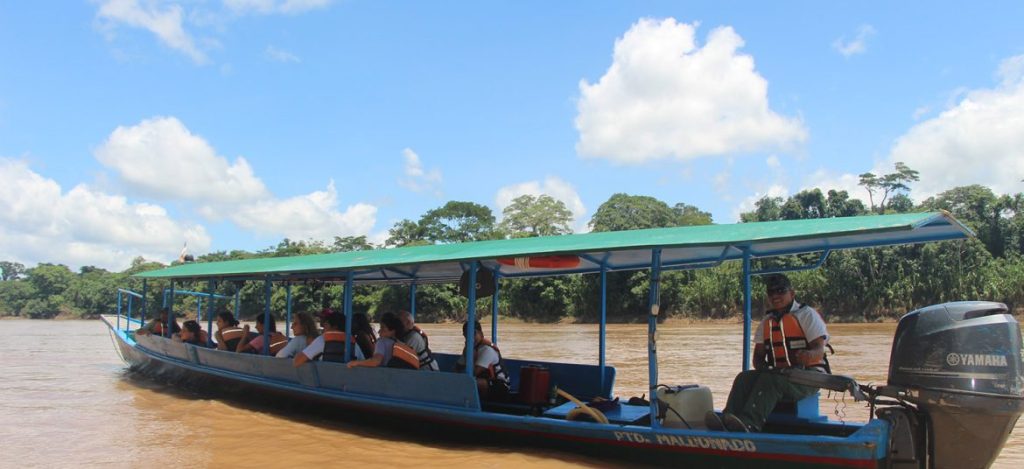
If there’s one trip that changed the way I see Latin America, it wasn’t a city or a beach; it was the jungle. In my last year of high school, we spent a week in Tambopata, deep in the Peruvian Amazon. It was humid, endless, and alive in a way that no city ever could be. We stayed in wooden lodges surrounded by nature in every direction, visited Indigenous communities, and learned how they live in harmony with the jungle. Every step felt like entering another world, one where humans are guests, not owners.
Swimming in the Amazon River was one of the craziest things I’ve ever done. The water was dark brown and thick, hiding everything underneath. When I jumped in, I felt a rush of fear, not knowing what was below me. By the end, all my clothes were ruined, completely maroon and smelling horrible. We laughed about it later, but everything we wore had to be thrown away. Still, that swim felt like a baptism into the wild, into Pachamama herself.
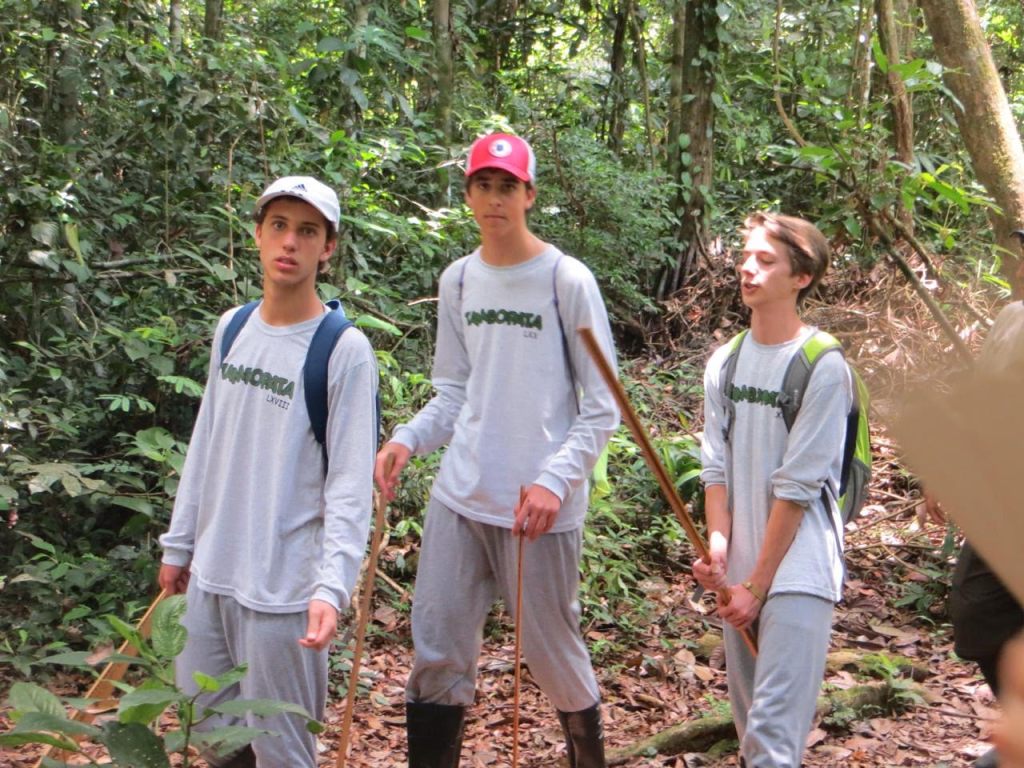
Nothing, though, compared to the night solo. One by one, each of us was left along a narrow jungle path, about a hundred meters apart, with no flashlight and no sound except the forest. When it was my turn, the guide whispered, “Stay here,” and walked away. Within seconds, I couldn’t even see my own hand in front of my face. The darkness was total. You could hear everything, insects, branches snapping, the river far away, but see nothing. I sat there for thirty minutes, heart racing, trying to stay calm. It was terrifying, but also strangely peaceful. When the guide finally came back, it felt like waking up from a dream. It was a once-in-a-lifetime experience, one that made me realize how alive the jungle really is.
Not everything went smoothly. When one of my classmates was climbing a massive tree, he got bitten by bullet ants, the kind locals say hurts like getting shot. He screamed, and we all froze. It was a quick reminder of how powerful nature is out there, how small we really are.
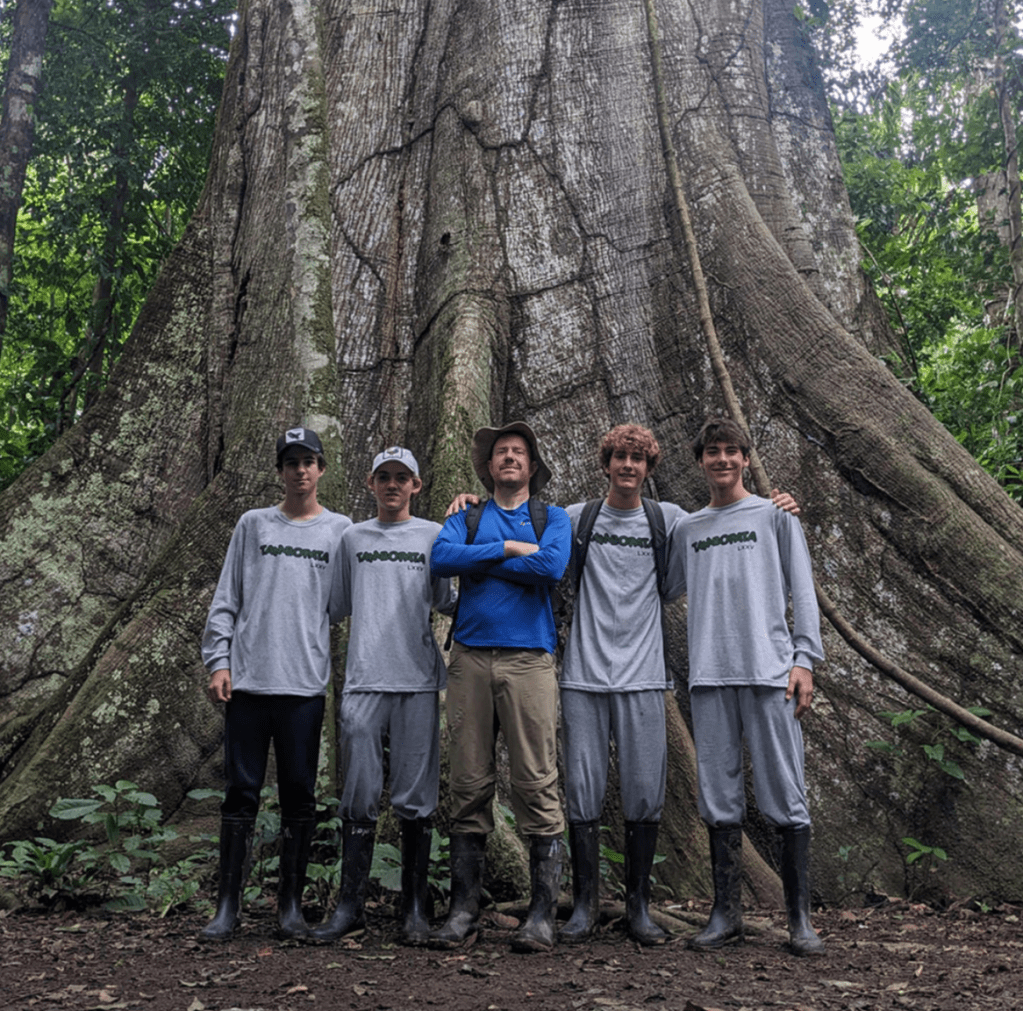
That week in Tambopata reminded me of what María Valeria Berros describes in “The Constitution of the Republic of Ecuador: Pachamama Has Rights.” In Ecuador’s 2008 Constitution, Pachamama, Mother Earth, is recognized as a living being with rights. In the jungle, that idea didn’t feel like philosophy. It felt real. The jungle breathed, the river moved with purpose, the air itself felt alive. Berros writes that this vision “challenges older paradigms of progress and development,” and I saw that tension everywhere, between conservation and extraction, between living with nature and living off it.
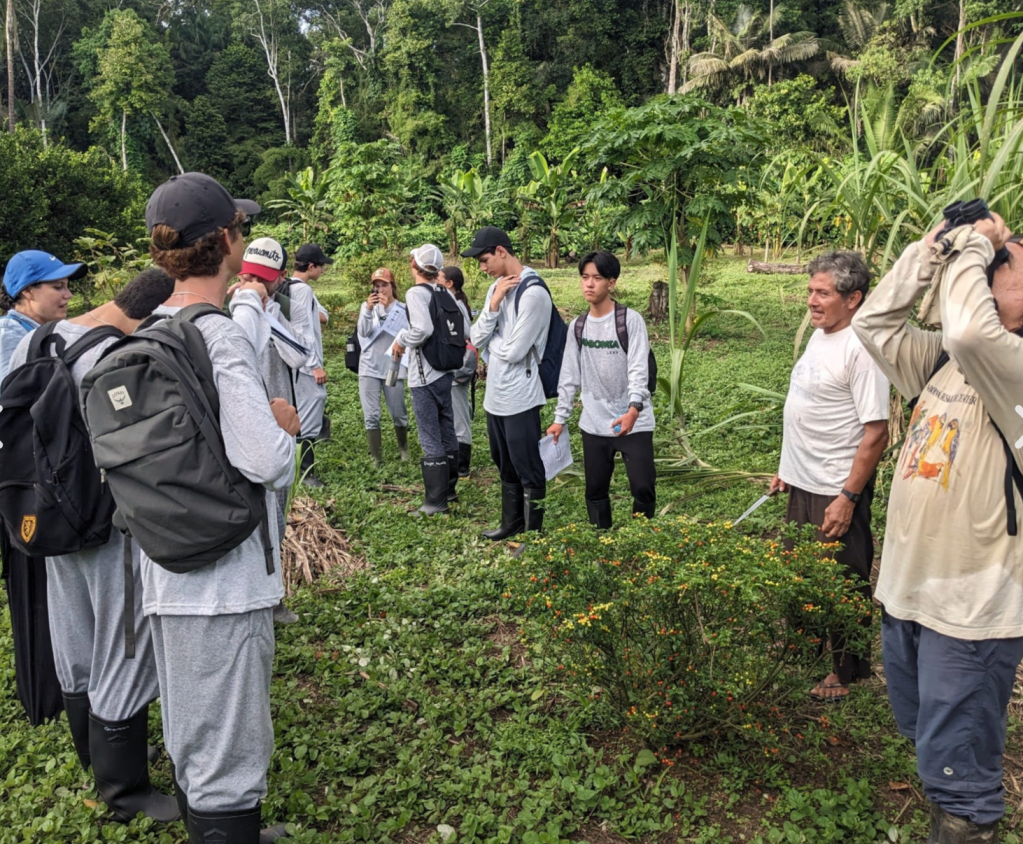
It also echoed what Bose et al. explain in “Women’s Rights to Land and Communal Forest Tenure in Latin America.” Many of the people we met in Indigenous communities were women. They led the tours, teaching us about medicinal plants and sharing stories about the river spirits. Bose argues that women are often at the heart of land defense, and it made sense: they were the ones teaching the next generation to care for the earth, not exploit it.
At the same time, I couldn’t stop thinking about Rosemary Thorp’s “Progress, Poverty, and Exclusion.” She shows how Latin America’s natural wealth has been extracted for centuries, leaving deep inequality behind. On the way to Tambopata, we passed through areas destroyed by illegal gold mining, rivers turned yellow, trees gone, and entire patches of jungle erased. It was the same story Thorp tells, still happening today: a region rich in resources but scarred by inequality.
That trip made me see what sumak kawsay, the “good way of living,” really means. It’s not about wealth or growth, but balance. Sitting alone in that forest, hearing the pulse of life around me, I understood what Berros, Bose, and Thorp were all trying to say in different ways: that the fight for land, equality, and respect for nature is all part of the same story.
When our boat finally left the river, I looked back at the jungle fading into the mist. It wasn’t just another trip; it was a lesson about what it means to live with Pachamama, not above her.
References:
Berros, María Valeria. “The Constitution of the Republic of Ecuador: Pachamama Has Rights.” Environment & Society Portal, Arcadia (2015), no. 11, Rachel Carson Center for Environment and Society, https://doi.org/10.5282/rcc/7131.
Bose, P., et al. “Women’s Rights to Land and Communal Forest Tenure: A Way Forward for Research and Policy Agenda in Latin America.” International Forestry Review, vol. 19, no. S4, 2017.
Thorp, Rosemary. Progress, Poverty and Exclusion: An Economic History of Latin America in the 20th Century. Inter-American Development Bank, 2012.
 Habla, Barrio
Leave a comment