In 2022, a group of my friends from Lima and I decided to “get to know Buenos Aires.” Of course, that sounded great on paper: like a cultural trip complete with museums, history, and deep reflection. The truth? We’d all been to Argentina before… just never by ourselves. Our real goal was simple: go out, meet people, and see if the city’s nightlife was as legendary as everyone claimed, and it was. Buenos Aires parties until six in the morning, as if it were a national sport.
The trip turned out to be a mix of chaos, culture, and fernet con Coca. (A lot of fernet con coca.) We barely drank Malbec, except for the weekend in Mendoza, where refusing wine would’ve probably been considered a crime. But in Buenos Aires, fernet con coca was everywhere. It felt like the city’s unofficial fuel.
The highlight of the trip, though, was definitely the Boca Juniors vs. Racing match at La Bombonera. We somehow managed to get seats close to La 12, Boca’s famous ultras. From the moment the game started, they basically forced us to sing, jump, and wave our arms nonstop for ninety minutes. There was no option to rest. The entire stadium moved like one single organism, and I realized that this wasn’t just football; it was a ritual.
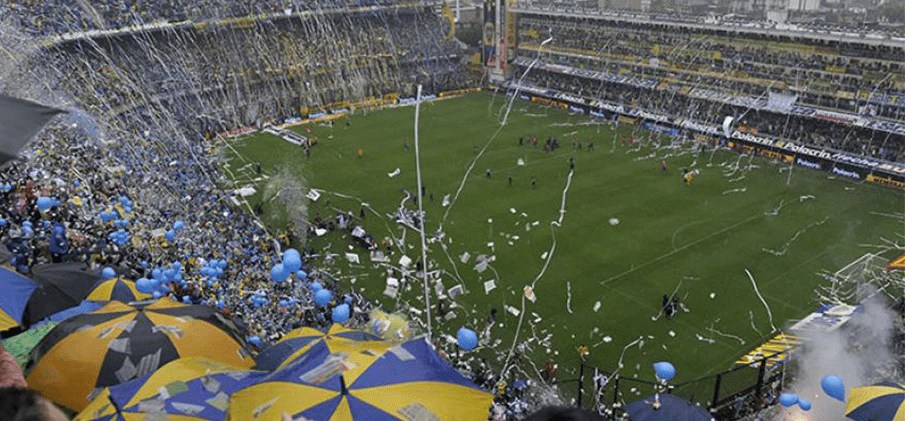
That energy reminded me of how Skidmore and Smith describe Argentina’s history during Perón’s era: a country built on collective spirit and emotion. Inside La Bombonera, you could feel that same working-class pride that Eva Perón talked about when she spoke of “el pueblo.” The chants, the colors, the sweat, everything felt like a living version of her speeches. Boca wasn’t just a club; it was el pueblo unido with drums and flags.
One night, we also went to a tango performance, though “went” might be too generous; we were basically dragged there by one of our friends. Still, it turned out to be worth it. The dancers moved with an intensity that made silence feel loud. Watching them, I thought about David Feliba’s article on tango’s comeback after the pandemic, how it represents connection, resilience, and the soul of Argentina. You could feel that.
The rest of the week was a blur of food, music, and endless conversations. We ate asado at Don Julio, which honestly lived up to the hype. Around the table, between jokes and stories, this warmth reminded me again of Eva Perón’s message about unity and love for the people. Everyone was equal there, just sharing meat, laughter, and way too much chimichurri. We ended the trip with a weekend in Mendoza, surrounded by vineyards and mountains. It was slower, quieter, a perfect ending after Buenos Aires’ madness. That’s when we finally switched from fernet con coca for Malbec (temporarily).

Looking back, what started as a “let’s go out in Buenos Aires” kind of plan turned into something much more profound. Argentina isn’t just beautiful; it’s alive with history, rhythm, and pride. From the chants of La Bombonera to the steps of tango and the flavors of asado, every part of it reflects what the readings showed: a country where culture and people are inseparable, loud, passionate, and always ready for another chorus.
References:
Feliba, David. “Masks and Distance Were Hard. Now Argentina Is Returning to the Tango.” The Washington Post, 2022.
Perón, Eva Duarte de. “History of Peronism.” In Born in Blood and Fire: Latin American Voices, edited by John Charles Chasteen, W.W. Norton, 2011, pp. 251–255.
Skidmore, Thomas E., and Peter H. Smith. Modern Latin America, 6th ed., Oxford University Press, 2005, pp. 84–89.
 Habla, Barrio
Leave a comment